When traffic speeds near schools endanger young pedestrians, waiting for municipal authorities to act can feel overwhelming. Discover a proven, step-by-step strategy to petition your city council, gather neighborhood support, and secure essential pedestrian safety infrastructure.
The Power of Grassroots Traffic Advocacy
Every morning and afternoon, millions of children across the country navigate busy neighborhood streets to reach their classrooms. Unfortunately, expanding suburban developments and increasing vehicular speeds have made school routes increasingly hazardous. Faded pavement markings, absent traffic calming measures, and high-speed drivers present daily risks to elementary and middle school students walking or biking to school.
Many parents mistakenly assume that installing a speed hump, traffic signal, or high-visibility crosswalk requires municipal initiative. In reality, local city councils and public works departments prioritize infrastructure investments based heavily on community demand, neighborhood petitions, and direct constituent feedback. By organizing a structured campaign to petition your city council for a school crosswalk or speed hump, grassroots advocates can turn high-risk intersections into safe pedestrian corridors.
Step 1: Conduct a Preliminary School Zone Traffic Audit
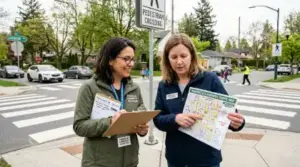 Before launching a petition drive or scheduling a meeting with local officials, you must gather objective data. City engineers and municipal transportation departments rely on empirical traffic data rather than anecdotal claims when evaluating infrastructure requests.
To build a compelling case, gather a small committee of parents or school neighborhood residents to perform a basic safety audit during morning drop-off and afternoon pick-up hours. Document the following critical details:
- Peak Traffic Volumes: Record estimated vehicle counts during the 30-minute windows immediately preceding and following the school bell.
- Pedestrian Counts: Count how many students and parents cross the targeted street or intersection.
- Hazardous Behaviors: Note instances of speeding, failure to yield to pedestrians, illegal U-turns, or distracted driving.
- Infrastructure Deficiencies: Document missing sidewalks, obstructed sightlines due to overgrown foliage, poor street lighting, or faded crosswalk lines.
To learn more about standard traffic engineering criteria and national safety frameworks, explore the guidelines published by the Federal Highway Administration Pedestrian and Bicycle Safety Program.
Step 2: Understand Municipal Speed Hump and Crosswalk Warrant Criteria
City public works departments follow specific policy guidelines—often called “warrants”—when determining whether a residential street qualifies for traffic calming devices or new crosswalk installations. Understanding these prerequisites beforehand will ensure your petition aligns with local engineering standards.
Typical municipal speed hump and crosswalk requirements include:
- Street Classification: Speed humps are generally approved for residential local streets with speed limits of 25 mph or lower, rather than major arterial avenues.
- Traffic Volume & Speed Thresholds: Most traffic engineering departments require an average daily traffic volume (ADT) between 500 and 3,000 vehicles, alongside an 85th-percentile speed exceeding the posted limit.
- Grade and Emergency Access: Streets must have an incline grade under 8% and must not interfere with primary emergency vehicle dispatch routes.
- Minimum Neighborhood Approval: Cities often require demonstrated approval from 60% to 75% of property owners directly adjacent to the proposed installation block.
Step 3: Draft and Mobilize a Powerful Community Petition
Once you understand your city’s requirements, it is time to rally your community. A well-crafted petition demonstrates strong local consensus and makes it easier for elected city council members to champion your cause.
Your petition document—whether physical, digital, or a combination of both—should clearly state the problem, the exact location requiring intervention, and the specific traffic calming measure requested (e.g., speed hump, raised crosswalk, or rectangular rapid-flashing beacon).
Essential Information to Collect on Your Petition:
- Full legal name of the resident or property owner
- Physical street address (confirming residency in the affected school district or block)
- Contact phone number or email address
- Signature and date
Partner with your school’s Parent-Teacher Association (PTA), school administration, and neighborhood homeowners associations (HOAs) to distribute the petition at school pick-up zones, community meetings, and local social media channels.
Step 4: Formally Submit Your Petition and Traffic Audit Report
With your petition fully signed and your audit data organized, prepare a formal submittal package for municipal review. Address your submission directly to your ward or district city council representative, copying the city’s Public Works Director, Transportation Department, and local school board liaison.
Your submittal package should contain:
- A formal, polite cover letter outlining the safety concern and key findings.
- Your completed petition signatures organized by street address.
- High-resolution photographs or video footage illustrating dangerous conditions during peak school hours.
- Your preliminary traffic count and pedestrian observation logs.
Step 5: Present Your Case at a City Council Public Meeting
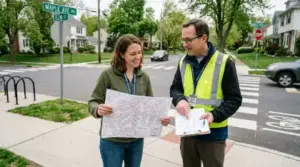
Submitting paper documents is only half the battle; presenting your request in person during the public comment section of a city council meeting ensures your petition remains a top priority.
Tips for an Effective City Council Presentation:
- Coordinate Speakers: Bring a small delegation including a parent, a local resident, and a school administrator or PTA representative.
- Keep Remarks Concise: Most city councils limit individual public comments to 2 or 3 minutes. Focus heavily on child safety, pedestrian volume, and neighborhood backing.
- Use Visual Aid: Share a concise 3-slide presentation displaying photos of the intersection, pedestrian routes, and signed petition statistics.
- Emphasize Community Partnership: Frame your request as a collaborative effort to support citywide safe routes to school initiatives.
Step 6: Follow Up and Maintain Advocacy Momentum
After your presentation, the city council will typically direct the municipal engineering department to perform a formal traffic study. Because engineering evaluations can take several weeks or months, consistent follow-up is essential.
Send polite bi-weekly inquiry emails to your city council office and public works point of contact asking for updates regarding the traffic study timeline. In the meantime, continue promoting safe walking habits, organizing neighborhood walking school buses, and raising public awareness.