Learn how to rally your neighborhood, petition city traffic departments, and secure physical speed-reduction infrastructure to keep student pedestrians safe.
Vehicle speed is the single most critical factor in determining whether a child survives a pedestrian collision. According to national pedestrian safety data, a child hit by a vehicle traveling at 20 mph has a 90% chance of survival, whereas that survival rate drops dramatically to under 50% if the vehicle is traveling at 30 mph or faster. At 40 mph, the likelihood of a fatal impact exceeds 80%. Despite posted school zone speed limits, commuting drivers frequently rush through residential streets and drop-off corridors, creating high-risk environments for kids walking or biking to class.
Young pedestrians are inherently more vulnerable than adults for several developmental reasons. Children have narrower peripheral vision, struggle to accurately judge the speed and distance of oncoming vehicles, and lack the height necessary to see over parked cars or suburban SUVs. When drivers speed through school corridors, these physical limitations create a dangerous recipe for preventable tragedies. While static warning signs alone rarely slow down hurried motorists, physical traffic calming near schools alters driver behavior by design. In this comprehensive guide, we detail how parents, PTA leaders, and community advocates can build a compelling, data-backed case to petition city engineers and local elected officials for lower speed limits and permanent speed reduction measures.
Understanding Traffic Calming: Design vs. Enforcement
For decades, traditional traffic management relied heavily on police enforcement and static metal signs to govern vehicle speeds. However, modern municipal planning and traffic engineering recognize that self-enforcing street designs are far more effective at maintaining consistent, low vehicle speeds around schools. Enforcement is inherently temporary—drivers slow down while a police cruiser is visible and accelerate the moment it leaves. In contrast, physical traffic calming measures use structural design changes to encourage drivers to slow down naturally, 24 hours a day, without relying on constant law enforcement presence.
When petitioning your city’s public works or transportation department, understanding the full spectrum of physical tools helps you advocate for the right solution for your specific neighborhood streets:
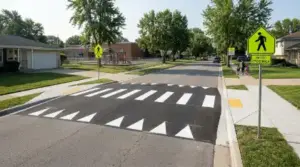
- Vertical Deflections: Raised physical structures such as speed humps, speed tables, and raised crosswalks that force drivers to reduce speeds smoothly at key pedestrian crossing points. Raised crosswalks bring the road surface up to the sidewalk level, making pedestrians far more visible to approaching traffic.
- Horizontal Deflections: Physical realignments like curb extensions (bulb-outs), chicanes, and mini traffic circles that narrow the visually wide roadway. By reducing open asphalt width, these elements eliminate high-speed drag-strip conditions and dramatically shorten crossing distances for young children.
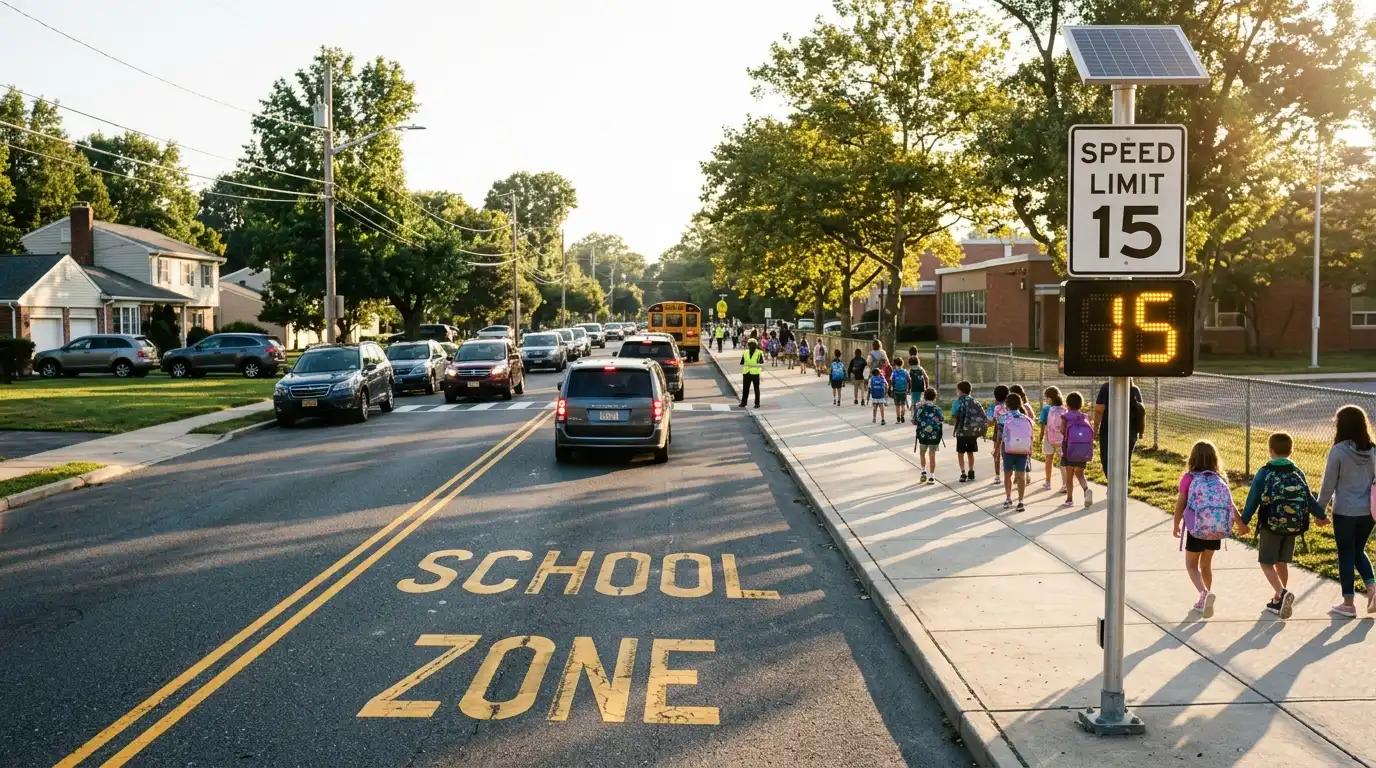
- Visual & Feedback Tools: Dynamic solar-powered radar speed feedback signs that alert drivers to their real-time speed, paired with high-visibility thermoplastic school zone pavement legends and flashing beacons.
- Access Management & Modal Filters: Diverters, temporary street closures during drop-off hours, and restricted turn lanes that minimize unnecessary cut-through traffic in dense residential neighborhoods surrounding school grounds.
Step-by-Step: How to Petition Your City for Speed Reductions
Securing municipal traffic calming projects requires moving past informal complaints and taking a structured, organized approach. City transportation departments receive hundreds of requests annually, so presenting a well-documented petition supported by clear evidence ensures your school zone receives priority attention. Follow these five key steps to build a persuasive advocacy campaign:
- Gather Local Speed Data and Document Hazards: Partner with your local PTA, school administration, or neighborhood association to document driver speeds and behavior during morning drop-off (7:30 AM – 8:30 AM) and afternoon pickup (2:30 PM – 3:30 PM). Take clear photographs and video footage of speeding vehicles, near-misses, sightline obstructions, and chaotic crosswalks. Many city police departments will deploy temporary speed trailer radar units upon request to log official vehicle counts and speed distributions.
- Review National Urban Design Standards: Ground your infrastructure requests in proven engineering guidelines from recognized authorities like the National Association of City Transportation Officials (NACTO) and the Federal Highway Administration (FHWA). Referencing NACTO’s Urban Street Design Guide demonstrates to city traffic engineers that your proposals follow established, safe urban design principles engineered specifically for low-speed school zones.
- Build a Strong Community Petition: Collect physical and digital signatures from residents, homeowners, and parents living directly along or utilizing the affected school corridor. City councils and public works committees prioritize traffic calming requests when supported by a clear majority of nearby property owners who are directly impacted by neighborhood traffic flow.
- Engage Your Local Metropolitan Planning Organization & City Council: Submit your formal petition along with traffic count data directly to your ward’s city council representative, municipal transportation commission, or regional planning council. Connecting your local project to broader pedestrian safety grants available through the U.S. Department of Transportation—such as Safe Routes to School (SRTS) funding—helps city officials identify potential revenue streams for your neighborhood.
- Request a Formal Traffic & Engineering Study: Formally ask your municipal traffic engineer to conduct an official engineering and traffic survey (ETS) to lower statutory speed limits from 25 mph down to 15 or 20 mph during posted school hours. Demonstrating high pedestrian volume alongside elevated vehicle speeds provides engineers with the regulatory justification needed to legally lower posted limits.
Comparing Common School Zone Traffic Calming Solutions
Not all traffic calming treatments suit every road type. Arterial streets carrying transit buses require different physical interventions than narrow residential side streets. Use this quick reference matrix to compare options when presenting proposals to your community and city officials:
| Traffic Calming Feature | Primary Benefit | Implementation Cost | Speed Impact |
|---|---|---|---|
| Radar Speed Signs | Immediate visual warning to distracted drivers | Low to Moderate | Reduces speeds by 2–5 mph |
| Raised Crosswalks / Speed Tables | Elevates pedestrians; physically slows traffic | Moderate | Reduces speeds by 5–8 mph |
| Curb Bulb-Outs | Shortens crosswalk distance & improves sightlines | Moderate to High | Increases pedestrian yielding |
| Mini Traffic Circles | Eliminates high-speed straightaways at intersections | High | Reduces severe intersection crashes |
Overcoming Common Resistance from City Staff and Drivers
Even the most well-intentioned safety proposals often face initial pushback from city engineers, emergency responders, or commuting drivers concerned about travel delays. Anticipating these common objections allows your advocacy group to offer practical engineering solutions right from the start:
Objection: “Speed humps delay emergency response vehicles.”
Response: Advocate specifically for speed cushions rather than full-width speed humps. Speed cushions consist of several smaller raised asphalt sections separated by gaps designed specifically to accommodate the wider axle widths of heavy fire engines and ambulances. Emergency vehicles pass over them unimpeded without losing critical response seconds, while standard passenger cars, SUVs, and light trucks are forced to slow down.
Objection: “There is no municipal budget for capital infrastructure projects.”
Response: Request low-cost, tactical urbanism pilot treatments. Cities do not need to wait for multi-million-dollar capital improvements to protect kids. Municipalities can quickly deploy temporary flex-posts (bollards), painted curb extensions, and modular rubberized speed humps using existing street maintenance budgets. These quick-build demonstrations allow the city to test real-world safety impacts before committing to permanent poured concrete infrastructure.
Objection: “Traffic calming will divert speeding cars onto adjacent residential side streets.”
Response: Request a comprehensive, corridor-wide traffic management plan rather than an isolated single-street fix. Installing area-wide traffic calming across a multi-block neighborhood network prevents traffic displacement by creating consistent low-speed travel expectations across the entire school zone radius.
Sustaining Community Momentum and Measuring Success
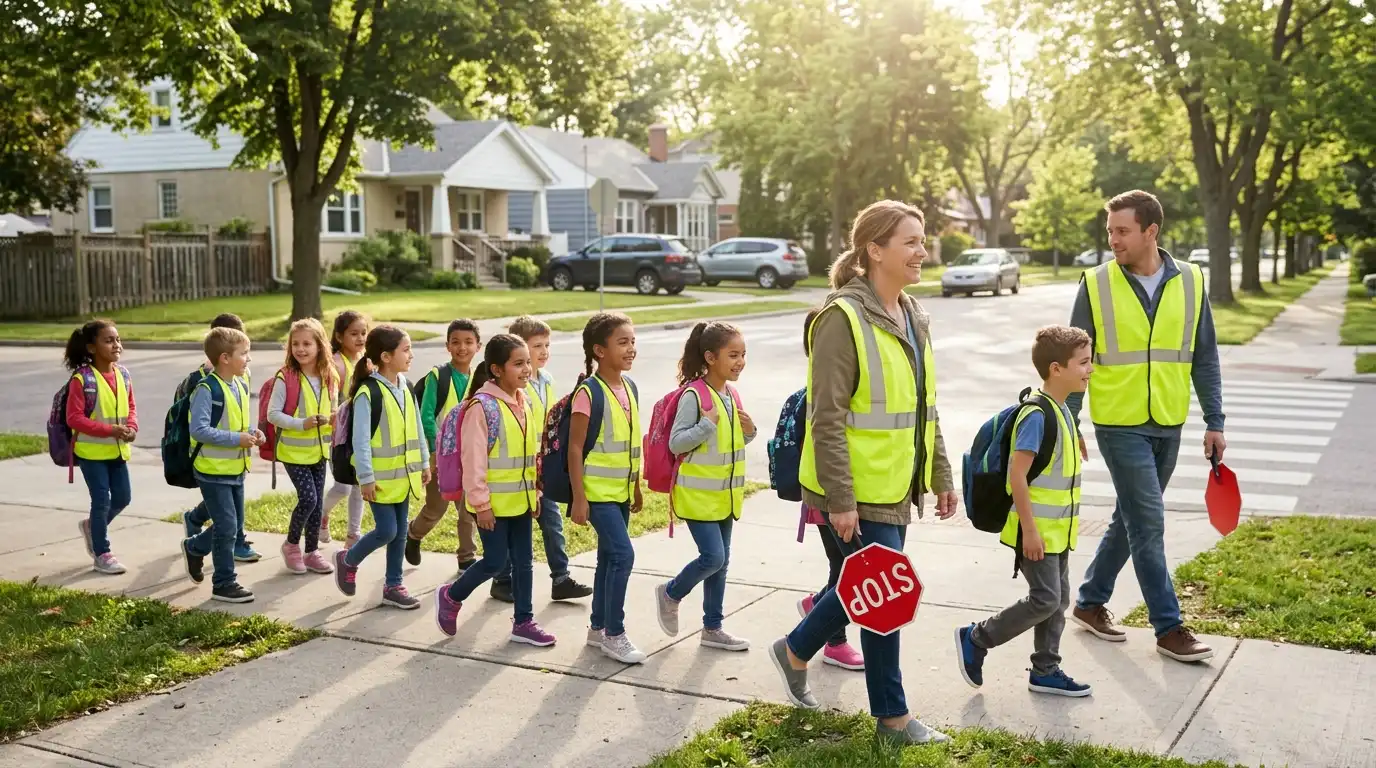
 Securing approval for physical traffic calming near schools is often a multi-month journey requiring persistent follow-up. Keep your community active throughout the process by organizing regular “walk to school” walking groups, sharing progress updates at PTA meetings, and maintaining open lines of communication with your local district council member.
Once your city installs speed reduction treatments, follow up by gathering post-implementation data. Count vehicle speeds again and publish your findings showing the drop in average speeds. Documenting concrete safety improvements not only validates your neighborhood’s hard work, but also serves as an inspiring blueprint for neighboring schools looking to protect their student pedestrians.
Final Thoughts
Slowing down traffic near schools requires organized, persistent community advocacy. By pairing parent petitions with technical design standards, crash data, and self-enforcing street treatments, you can convince local city leaders to invest in physical traffic calming measures that protect children every day on their walk to school.